Chapter 11
The Truth Buried With Her

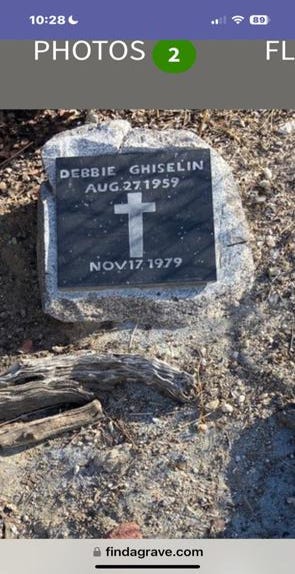
When I was sixteen, I believed I knew what had happened the night Debbie died.
Like everyone else in my family, I accepted the story I had been told. I had no reason to question it. Adults, law enforcement, and the courts were worlds I didn’t understand. My stepfather’s explanation became my explanation because it was the only one I had.
It would take more than forty years before I learned that much of what I believed was untrue.
The tragedy began before sunrise on a cold Saturday near Thanksgiving during my junior year of high school. We lived in an isolated rural valley without a telephone. News rarely reached us quickly, so when a truck came racing up our dirt road just after dawn, throwing gravel in every direction, I knew something was terribly wrong.
A neighbor pounded on the door.
My stepfather had been in a serious automobile accident while driving home from the local bar.
At the time, we were told another vehicle had been involved. We were told his brother had been riding with him. We were told there was little anyone could have done.
As a frightened sixteen-year-old, I accepted every word.
Years later, after obtaining the original investigative reports, interviewing people who had been present that night, and reading contemporary newspaper accounts, I discovered that almost none of those details were accurate.
But I didn’t know that then.
All I knew was that someone had died.
Her name was Debbie.
She was twenty years old.
She was my boyfriend’s older sister.
She was also my friend.
I was so confused and sick. The acid in my young stomach was in my throat, and I knew the worst of the worst… This was true and irreversible, and I was powerless to change anything.
The criminal investigation, the hospital, and the legal consequences consumed the adults around me. My sisters and I were left trying to understand events no child should have to process.
A few days later, my mother insisted we attend Debbie’s funeral.
I remember the cold before I remember anything else.
The small chapel felt damp and dark. I wore one of the few dresses I owned, a sleeveless summer dress that offered little protection from the November air. Even decades later, when I think about that day, I remember being cold.
My mother led each of us to the casket.
I didn’t want to go.
Until then, I had never seen a dead person.
Standing before Debbie’s coffin, I noticed that the pale blue of her dress nearly matched the color of her skin. That single image stayed with me long after every other detail faded.
I became sick almost immediately.
No one asked whether we were all right.
No one explained what had happened.
After the funeral, we went home.
The subject was never discussed again.
A few days after the funeral, my mother asked me to do something no sixteen-year-old should ever be asked to do.
She wanted me to go into the tow yard and retrieve my stepfather’s personal belongings from the wrecked car.
She couldn’t bring herself to do it.
So she sent me.
She stayed in the car with my sisters while I walked toward the wreck alone.
The tow yard owner watched me approach. She stayed in the car while I went to the wreck. I remember the smell of grease, cigarette smoke, and old engine oil hanging in the air. The Pontiac barely resembled the car I had known. The front end had collapsed inward, the trunk had been forced open during the investigation, and dried blood still stained the interior.
I had come looking for a pair of eyeglasses.
Instead, I found the physical evidence of a tragedy I was too young to understand.
The owner spoke bluntly. He told me investigators had removed drugs from the vehicle during their search. At sixteen, I didn’t know what to believe. I only knew I wanted to leave.
I gathered the few belongings my mother had asked for.
Then I became sick.
I don’t remember walking back to the car.
I only remember wanting to forget what I had seen.
For decades, I believed the version of events my stepfather had told us.
Only after retiring did I begin searching for official records. I wanted to understand what had actually happened that morning.
What I found changed my understanding of my childhood.
The accident reports, newspaper coverage, and witness interviews painted a very different picture from the one I had lived with for most of my life.
According to the investigative records, my stepfather had spent the evening drinking heavily at the bar. Witnesses described him offering drugs to other patrons. Several people tried to prevent him from driving because they believed he was too impaired to operate a vehicle safely.
Those warnings were ignored.
The records indicate that Debbie accepted a ride home.
She never arrived.
As I continued reading, each page dismantled another piece of the story I had believed since I was sixteen.
Debbie’s father was a newspaper publisher. Throughout the trial, he wrote detailed accounts of the proceedings and distributed his newspaper throughout the surrounding communities. Copies were left in local businesses, stores, and places where nearly everyone—including students and parents in my small town—could read them.
I understood why he wanted people to know what had happened to his daughter. I cannot imagine the depth of his grief. At sixteen, though, I experienced those stories differently. I wasn’t responsible for the crime, but I carried its shame. Each article reminded me of my classmates’ families, to which I belonged. I walked into school knowing many of the adults and students had read about my stepfather before they saw me.
Whether intended or not, the publicity became part of my punishment.
Debbie's family lost a daughter. Nothing compares to that loss. But my sisters and I also became casualties of the tragedy. We did not choose the man whose actions changed all of our lives, yet we carried the consequences into our classrooms, our friendships, and our futures.
Again, so sad that action of others influence your childhood life and created a scar that you have to live with.